Sunday, October 28, 2012

Thanatophobia
Thanatophobia: the fear of death.  It is something that almost everyone fears at one  point in their life.  Am I going to die? How am I going to die? When am I going to die?  Why do I have to die?  All in all, death is a very frightening thought.  One moment, you are living, moving, and feeling; the next moment, you are forever immobilized, incapable of thoughts or feelings.  
I have personally experience this fear of death before during a family trip to Yosemite.  At Yosemite, my family and I had stopped to look at a waterfall.  At the spot, we were right next to the river as the water fell down.  While there, there was a slanted  piece of land going right next to the river right.  I went there to watch the river when suddenly i began sliding downward toward the river.  Because I was wearing flip flops, I could not get a good grip on the gravel-filled ground and I kept sliding.  Luckily my mom was right next to me and she helped me up.  Although I was 2 or 3 feet from the actually river, the thought of falling into the river and being swept down the waterfall was a thought that stuck in my head all the way to my home.  What if I had died?  
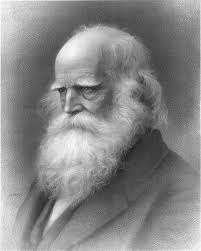
In "Thanatopsis," by William Cullen Bryant, Bryant takes on a positive outlook toward death.  In "Thanatopsis," Bryant describes how when one dies, he returns to nature.  By being buried, one becomes forever part of the Earth and helps new life arise.  He also points out that when you die, you will not be alone since, "Thou shalt lie down/ With patriarchs of the infant world--with kings,/ The powerful of the earth--the wise, the good..."  Overall this reflects his positive image of death and that one should not fear it. 
I agree with Bryant on the fact that one should not fear dying; however not for the same reasons.  While his are more transcendentalist based, I believe that instead of fearing death, you should go out and enjoy every moment of life until death.  Yes, yes, it sounds like YOLO, but it is true.  If you spend time fearing death, how will you ever enjoy life while you have it?

Sunday, October 21, 2012


The Appeal of Appeals
Logical, emotional, and ethical.  These three persuasive appeals can be seen almost everywhere one looks.  But why do people use these appeals to persuade their audience?  In simple terms, they are used because they are very effective.  For example, in Thomas Paine's The Crisis, Paine uses many appeals in attempt to remind the soldier what they were fighting for.  When describing the atrocities of the British, Paine writes, "Britain, with an army to enforce her tyranny, has declared, that she has a right (not only to tax) bu "to BIND us in ALL CASES WHATSOEVER," and if being bound in that manner is not slavery, then there is not such a thing as slavery upon earth" (246).  By using words such as tyranny and slavery, Paine appeals to the audience's emotions by trying to stir anger toward the British.  This reminder allowed Paine to urge the soldiers forward and to keep them fighting.  Paine also writes to his audience not to fight for themselves, but also for the children.  By referencing children, Paine uses an ethical appeal, calling to people's morals and values to convince them that his position is correct.

These appeals were  used frequently during the presidential debates between President Barack Obama and Mitt Romney.  Throughout the debate, both candidates used logical appeals by stating many statistics related to job creation and unemployment to convince the audience that they were the best candidate for the job.

The SPCA also uses emotional appeals very effectively in order to try to raise money for abused animals.  By flashing images of injured pets with slow and sad music in the background, the commercials make the audience feel bad for these animals and feel the need to donate money to their cause.

Sunday, October 14, 2012

Identity

When you hear the name Superman, what do most people think of?  Most would picture the invincible and strong man who saves those in need.  This is his identity: it is what makes him who he is and defines him as a person.  Identity.  The word itself has so much meaning and so much importance for everyone.  For example, Chris Brown's identity was one defined by his good music and his thrilling entertainment career.  However, after his incident with Rihanna, his identity has been scarred forever.  His good name has now been stained with the domestic violence he committed.  So when someone's good name is put into question, is it worth one's life to save?  This is the situation faced by John Proctor.  During the hysteria surrounding the Salem Witch Trials, John Proctor himself gets accused of witchcraft while trying to save his wife and his friends from their imminent death.  After this turn of events, Hale, Parris, and others attempt to get a confession out of him-- a lie-- that he had seen and was with the Devil.  Proctor confesses to this after much internal conflict; however, he is then asked to sign his name --his identity--on the confession to show the townspeople that the court was right about all of the witches.  To this, Proctor refuses, as Miller writes, "Because it is my name!  Because I cannot have another in my life... How may I live without my name?  I have given you my soul; leave me my name!" (Miller.4.725-730). This leads to Proctor’s death, as he refuses to have his good name spoiled publicly.  I believe Proctor made the right choice in this situation.  If he had signed his name on that paper, he would give the court credibility it did not deserve and his name would forever be looked down upon.  He will be seen as someone who is weak, gives up his friends, and is a sinner.  This would stain his good name forever. He would have to carry this with him along with the guilt of his actions.  By refusing to sign, however, he will preserve his good name.  Even if this leads to his death, his legacy will still be a respectful one.

Sunday, October 7, 2012

Mass Hysteria
Your thoughts are frenzied and fear fills your soul.  You and a crowd have banded together to fight off the unknown.  This is mass hysteria.  When a group of people are all suddenly afraid of someone or something and are driven to crazy and often irrational actions.  Mass hysteria can be seen throughout history and literature.  For example, in Arthur Miller's The Crucible, the entire town of Salem is thrown into a state of mass hysteria when teenage girls and women lie about seeing Satan and knowing which people in town are witches. These girls then proceed to falsely accuse many innocent women in the town for their own personal gain.  Out of the townspeople's fear, the women accused are sentenced to prison and even to death!  Before these girls ruined their reputations with slander, some of the women accused were very well respected and were seen as pious, devote Christians; however, they,because of the hysteria which is rampant in the town, they face the death sentence.  This type of behavior can also be seen during the release of the movie, The Dark Knight Rises.  During the midnight premier of this movie, there was a mass shooting in a Colorado theater where many were killed.  After this event, everyone was scared to go to the movies.  Rules were made by theaters which stated that no one could dress up in costumes while in the theater.  Everyone was in a state of fear, worrying about their safety after the senseless shooting.  This reflects mass hysteria.  Although the actions taken by people were not crazy or irrational, there was a state of mass hysteria in which everyone was concerned about their safety.